

What will help make homes more affordable?
Despite some sellers being willing to cut prices, contract cancelations have been rising
5 min read
KEY POINTS
- The Federal Reserve is expected to continue raising interest rates as strong employment and persistent inflation signal that more action is needed to restore price stability.
- Higher mortgage rates and elevated home prices have significantly reduced housing affordability, causing a sharp decline in home sales.
- Despite the housing market slowdown, the Fed is likely to prioritize fighting inflation over supporting housing, meaning further rate hikes remain likely.
With the “full employment” mandate on the Federal Reserve met, the focus for monetary policymakers is fully on the “price stability” mandate. On that front, it is increasingly clear that the Fed has more work to do. The last report on employment was the best of the year, showing more job growth than expected and a broadening of hiring across the economy. Unfortunately, the most recent Consumer Price Index (CPI) report was the worst of the year. The increasing number of non-energy “core” inflation measures is now all but locking in a move by the Fed at its December meeting. The data has even raised the low probability of a 0.50% move.
The concept of raising rates to cool inflation is based on the idea that higher rates will slow economic growth by making borrowing more expensive which will cause some consumers and businesses to delay or cancel projects. This decision lowers the demand for goods and services which, at least ostensibly, means price pressures should decline and allow inflation to fall. The problem is that this tool is a very blunt instrument which means, at times, there are sectors of the economy that are not overheating but are impacted by these policies, nonetheless.
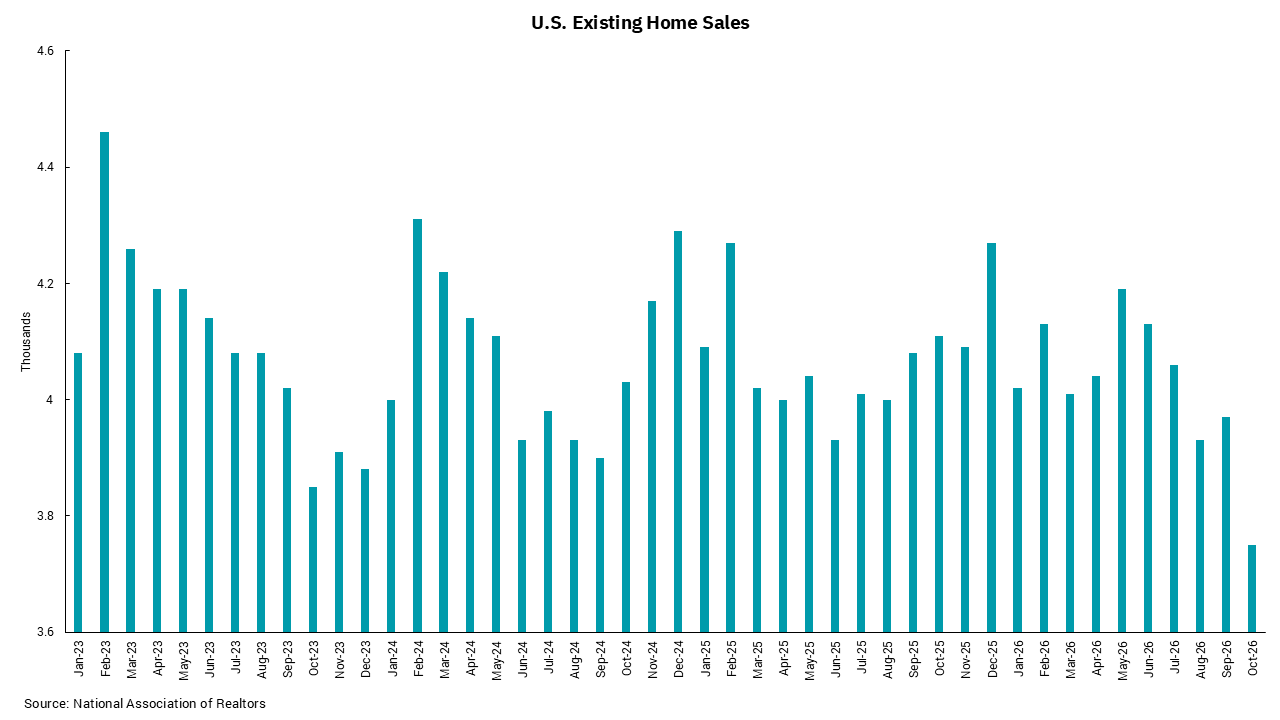
Our chart this week concerns one such sector, housing. Many current homeowners have benefited from rising home values, and many were able to lock in low mortgage rates during the extended period of low interest rates over the last 15 years. Unfortunately, for those trying to get into the housing market, or those looking to move within it, higher prices are now being combined with higher rates, which is a combination leading to very low measures of affordability.
The result is a declining number of sales across new and existing homes. Looking at the chart, we see a virtual collapse in existing home sales for September, and existing homes are a much larger part of the housing market than new home sales. Despite increasing stories on sellers willing to cut prices, contract cancelations have been rising as mortgage rates continue to move higher and the general mood for home builders and sellers gets worse. The path forward is going to take some time to see the housing market improve. Plans to reduce some levels of regulation could help and, hopefully, personal incomes may increase over time and result in a more affordable environment.
In the short run, we are dealing with the lasting impacts of the government’s distortion of the housing market through quantitative easing and interest rate suppression. As important as the housing market is, it will not keep the Fed from acting to reduce inflation by raising rates further.
Get By the Numbers delivered to your inbox.
Subscribe (Opens in a new tab)