

The hidden costs of higher gas and diesel prices
From farmers to consumers to politicians, the impact of rising energy prices is hitting everyone
5 min read
KEY POINTS
- Diesel and gasoline prices are rising sharply as refinery disruptions and limited refining capacity constrain fuel supplies.
- Higher energy costs are increasing expenses for consumers, transportation companies and farmers, while adding inflationary pressures across the economy.
- Although elevated fuel prices remain a headwind to economic growth, they are not currently expected to push the U.S. economy into recession.
This week’s chart won’t be a surprise to anyone. Gasoline and diesel prices are approaching, or in the case of diesel, exceeding the levels we saw during the pandemic-fueled inflation surge. The Iran conflict continues to buffet crude oil prices but the spread between the price of crude and the total price of all the distillates from oil has widened recently.
This widening reflects both the ongoing war between Russia and Ukraine and the longer-term trend of stable to declining U.S. refining capacity. The Ukrainian military has recently become more accurate in their ability to use drones to impact Russian refineries. This has significantly impacted Russian diesel production and, since Russia was the largest exporter of diesel in the world, global diesel supplies have become limited. Within the U.S., the last large-scale refinery was built in Garyville, Louisiana, and since peaking in 2019, overall refining capacity has been on a steady decline. The result, declining supply even in the face of only stable demand, leads to higher prices.
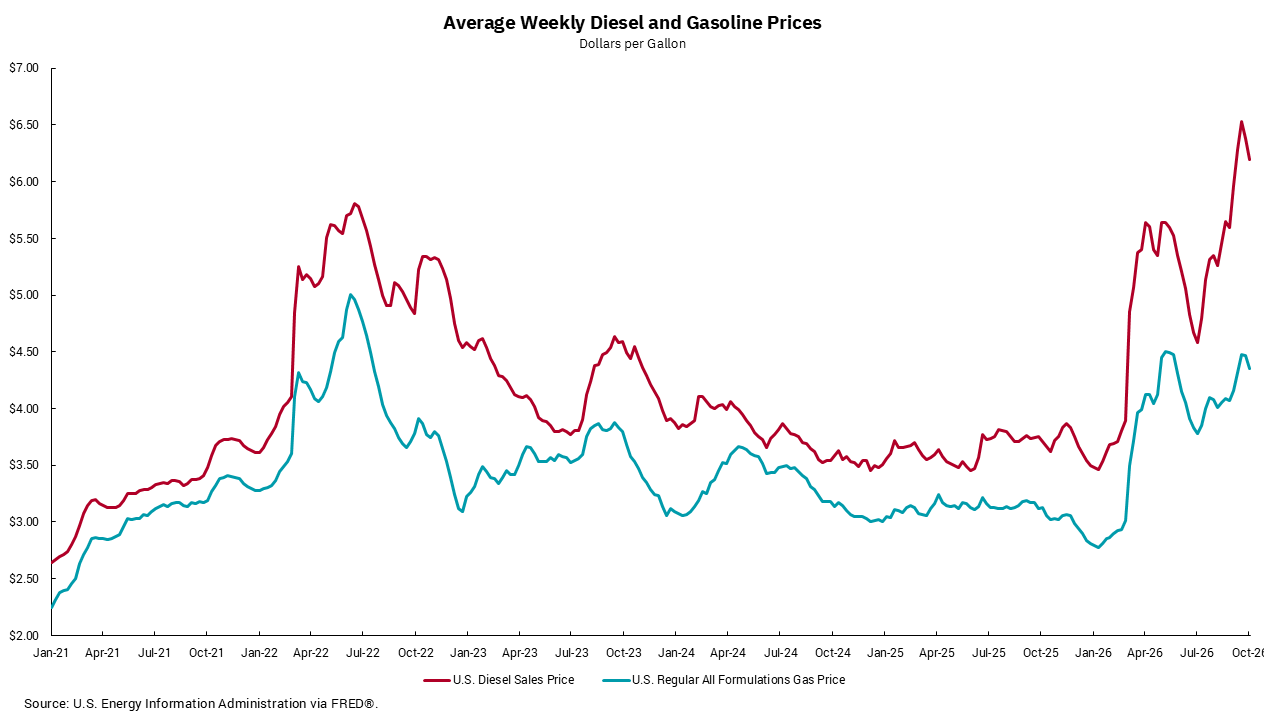
Meanwhile, the economic impacts of higher energy are widespread. Consumers feel higher gasoline prices at the pump, and they see it in higher airfares. Shipping companies have seen fuel costs skyrocket. Farmers are getting a double whammy, as fuel for farm equipment goes up along with crude-based fertilizer prices. Although the Federal Reserve removes energy and food prices when considering core inflation, longlasting increases in energy prices will eventually bleed into core inflation measures. Hence, it is the duration of the price increases which really matters from a Fed-defined inflation standpoint. However, from a consumer-defined inflation standpoint, the impacts are more material.
There are also political impacts from increasing energy prices. There is no single economic data point with a higher correlation to any president’s approval rating than gasoline prices. In this case, it’s a negative correlation: higher gasoline prices mean a lower presidential approval rating. With the midterm elections approaching, this correlation broadens to the current president’s political party approval rating, which helps explain the difficulties many Republican candidates are experiencing within this election cycle.
An agreement to end the Iran war would most certainly help alleviate price pressures on crude oil. The response in the oil markets to the now-defunct Memorandum of Understanding with Iran shows the world is well supplied with oil, but relief at the pump might take longer and be more impacted by the Russia/Ukraine war. All that said, higher energy is a headwind to growth but currently not enough to tip our economy into a recession.
Get By the Numbers delivered to your inbox.
Subscribe (Opens in a new tab)