


Do you remember the days of 2% inflation?
The Fed remains committed to its target despite mixed economic signals
5 min read
KEY POINTS
- Recent CPI and PPI reports showed cooler-than-expected inflation, but progress toward the Fed’s 2% target remains slow.
- Higher energy prices, continued economic growth and rising demand for labor and commodities could keep inflation pressures elevated.
- With employment and inflation data providing a mixed picture, the Fed appears more likely to maintain a tightening bias than to rush toward rate cuts.
The first week of this month’s data releases was heavy on the employment side of the Federal Reserve’s dual mandate. The following week, the data was heavy on the inflation side of the mandate. Just as with the employment data, the inflation data provided a mixed picture. The employment market is no longer a reason for the Fed to lower rates, as it was late last year and into the first quarter of 2026, but it is not calling for higher rates either. Similarly, the last two months of inflation data may provide a reason for the Fed to hold rates steady, but there is enough “sticky” inflation to support the Fed’s tightening bias.
For the second month in a row, the Consumer Price Index (CPI) and Producer Price Index (PPI) showed somewhat less inflationary pressure than expected. Our charts this week show this progress but also highlight the extended period, going on six years now, that inflation has exceeded the Fed’s 2% target. New Fed Chair Kevin Warsh has explicitly confirmed that this target is still in place and the primary driving factor behind the Fed’s thought process.
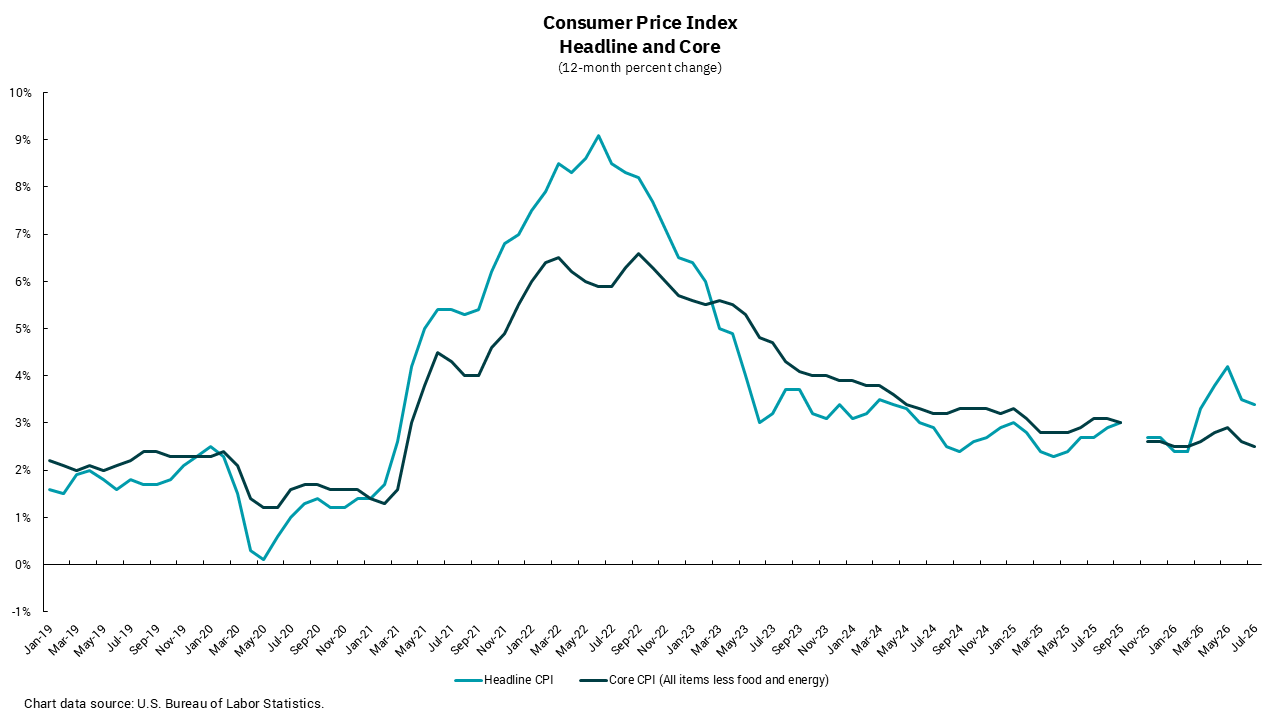
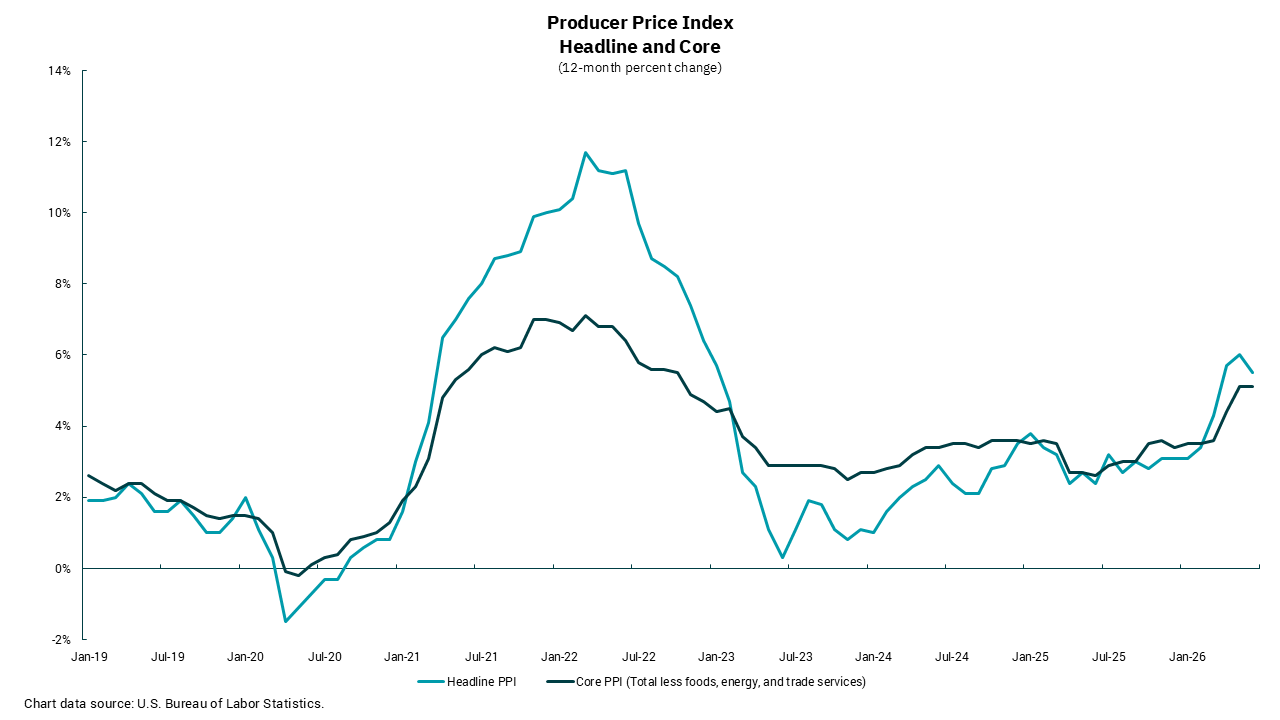
Our charts also show that this “improvement” follows a recent move higher in inflation, driven largely by higher energy prices primarily resulting from the conflict in Iran. While we feel the administration is moving towards a resolution with Iran, the rhetoric and actions from both sides suggest that tensions are likely to persist and higher energy prices might be less transitory than hoped. The bottom line, however, is that inflation’s progress toward the Fed’s 2% target has been painfully slow and risks for inflation may be skewed to the upside going forward.
This isn’t all bad, as the economy continues to grow. We’re increasingly seeing the effects of AI-related capital spending and broader business investment driven by tariffs and incentives within the One Big Beautiful Bill Act (OBBBA). Yet this growth is causing upward price pressures across many markets as demand for commodities and skilled labor push costs higher. At the same time, the continued moderation in shelter costs, slower home price appreciation and cooling rents are offsetting some of these pressures.
The Fed now has to consider the push and pull of these factors, along with the idea that, at some point, the improved productivity of implementing AI across broad parts of our economy may be a disinflationary force. Thinking about the timing and impact of these changes is very difficult and is leading to differing opinions within the Federal Open Market Committee (FOMC). There were three dissents at the last meeting, with those members voting for higher rates rather than maintaining the current policy stance. This month’s labor and inflation data supports the votes to stay stable, but another set of labor and inflation reports will be released before the next FOMC meeting. We will all be watching that data very closely.
Get By the Numbers delivered to your inbox.
Subscribe (Opens in a new tab)