


Will the Fed have to raise rates this year?
Rising goods prices, tariff pressures and the long-term effects of deglobalization are creating new obstacles on the path back to the Fed’s inflation target
5 min read
KEY POINTS
- Core goods inflation has turned positive again, reversing a long-standing trend that once helped keep overall inflation in check.
- Tariffs, supply chain shifts and deglobalization are adding inflationary pressures that could make it harder for the Fed to achieve its 2% target.
- With inflation risks persisting, the Federal Reserve may be forced to maintain a tighter monetary policy stance for longer than markets expect.
While the oil markets are playing a role in the now-increasing odds of a rate move at the July Federal Open Market Committee (FOMC) meeting, there are additional reasons to be cautious as we think about inflation returning to the Fed’s 2% target. It is also important to keep in mind that Fed Chair Kevin Warsh has clearly stated that this target is the top priority for monetary policy.
Shelter, the largest weighting in the Fed’s “core” inflation measures, has been moderating as home prices nationally have slowed their ascent and some markets are seeing outright declines. However, core services, a segment where wages are the biggest cost component, have been moving higher and, as our chart this week shows, core goods inflation is moving higher as well.
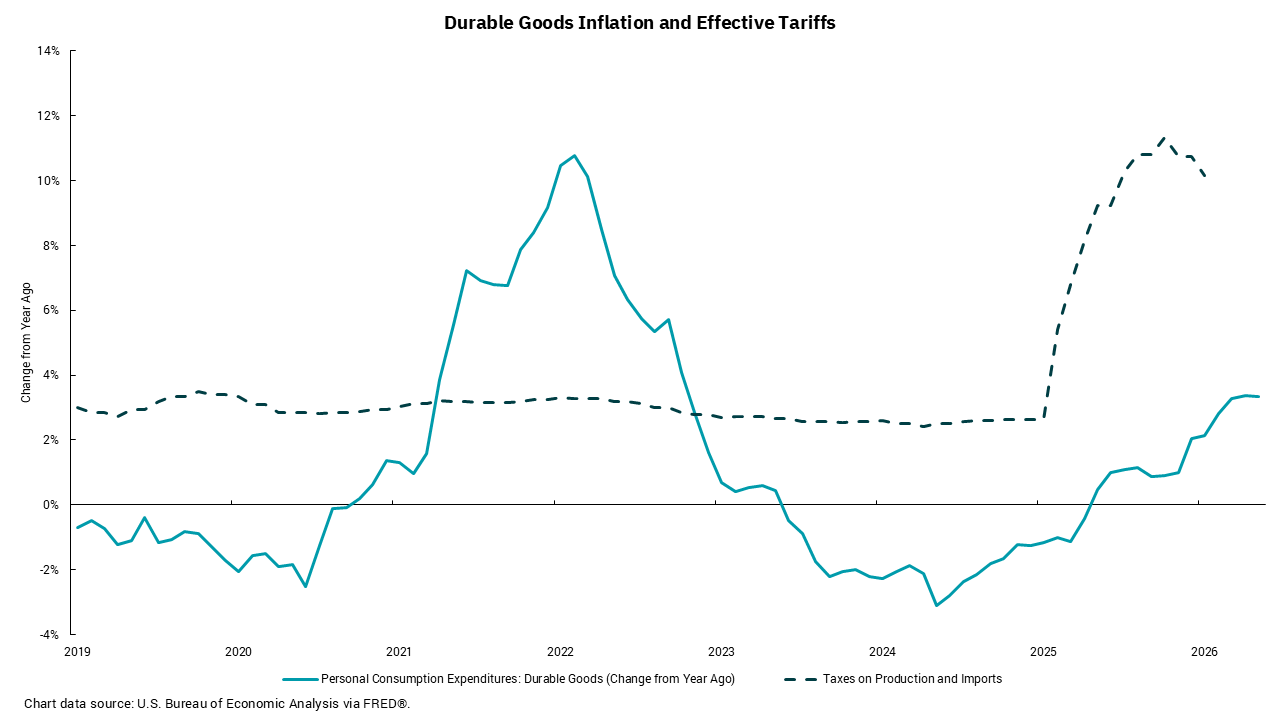
In this week’s chart, we show tariffs as one explanatory factor for the rise in goods inflation but there are other factors at work too. Pre-pandemic core goods were a consistent dis-inflationary part of the overall inflation picture. In fact, one of the key benefits of the globalization of the economy was the ability for companies to seek lower-cost production which led to steadily decreasing goods pricing. As the pandemic interrupted the flow of goods, supply chains became disrupted and the rate of inflation on core goods skyrocketed. Even as time allowed the flow of goods to improve, companies began making different decisions on where to locate production and to find ways to lessen the risk of similar events in the future.
Even with this shift is production caused by the pandemic, core goods returned to a dis-inflationary part of the picture until tariff policies came into focus. Since then, core goods inflation has turned positive and now exceeds the Fed’s 2% target on its own. This can complicate the decision-making process for the FOMC going forward as a segment which had been additive to achieving an overall 2% inflation rate is now a headwind. To be sure, tariff policies have come under scrutiny, and some policies have been reversed by the Supreme Court, but the president recently announced additional tariffs which could reinforce some of the underlying trends in place.
Warsh and the rest of the FOMC have a difficult job. Forecasting what might happen geopolitically is nigh impossible, yet the implications this all could have on price levels and the ability to see inflation move back towards the 2% target are real. Our overall sense is that getting back to 2% in an environment of deglobalization, enhanced geopolitical stress, abundant liquidity and growing negativity around the U.S.’s fiscal position will make rate cuts very difficult. We don’t think the Fed needs to aggressively raise rates, but the bias toward monetary policy from here has shifted towards tightening.
Get By the Numbers delivered to your inbox.
Subscribe (Opens in a new tab)